Pages

Showing posts with label Jazz Age. Show all posts

Wednesday, September 12, 2012

In Which Designers have a Field Day- the 1930's

Last week in the 1920's, we had straight, tunic-like dresses that were meant to disguise a woman's figure. In the 1930's, we see a return to structure and tailoring in garments, with emphasis on the shoulders and waist. The film industry and celebrities also began to influence fashion for the first time, and vice versa. "Let's poke it with a stick."

Source
In the late 1920's, long skirts were coming back into fashion. Designers eased back into them, and by the 1930's, they had lowered from just below the knee to just above the ankle.

Bette Davis.
The skirts on most evening gowns went back to floor-length.

Source
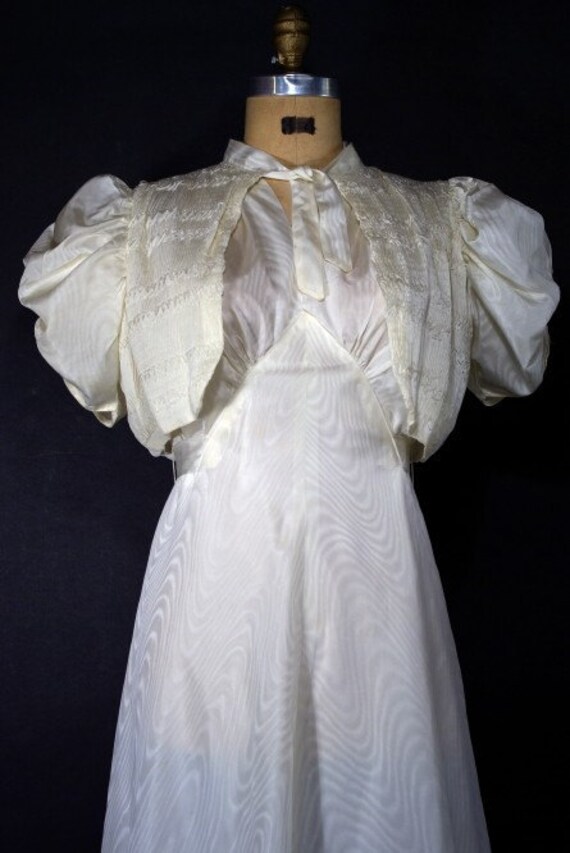
Shoulders became a focal point of both day and evening dresses. Volume was the important thing, not how it was achieved. Designers experimented with different ways to get that added poof.

Source
Source
Source
The most common way to accentuate the shoulders was to have lighter fabrics that were loose around the shoulders so that they fluttered out (seen above).

As I mentioned before, waistlines came back into existence and cinched in at the natural waist.

An evening wear example
And an (upscale) afternoon example. Check out the birds, I love them.

In addition to focusing on the natural waist, several dresses and jackets emphasized the empire waist.

Source
Source
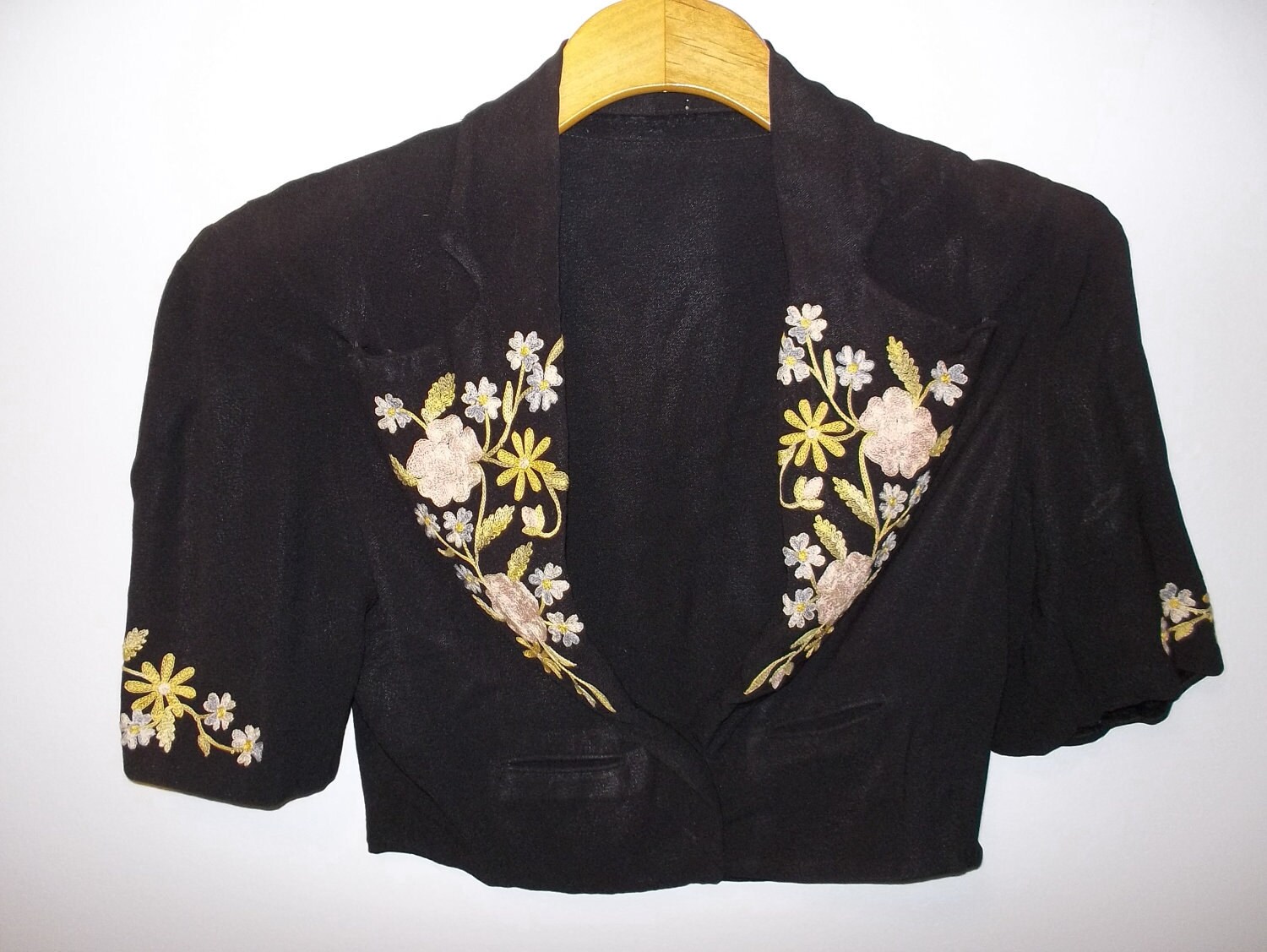
It seems to me that this was really a time for experimentation as far as textiles and embellishments go. Though chiffon and other light fabrics were popular, I've seen a veritable smorgasbord of different fabrics used in different ways.

Source

Source
Source
Source

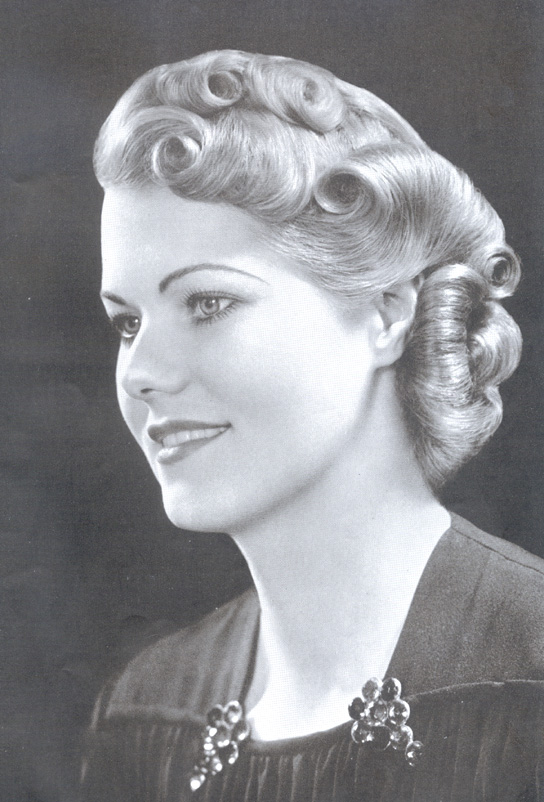
The short bobs of the 1920's remained popular during the entirety of the 1930's. For those who opted to keep their hair long, buns were worn at the back of the head or the nape of the neck, with curls that foreshadowed the 1940's.

Source
Cloches stayed popular until the early-mid 1930's, when they were replaced by small hats that usually tilted over the forehead at an angle.

Source
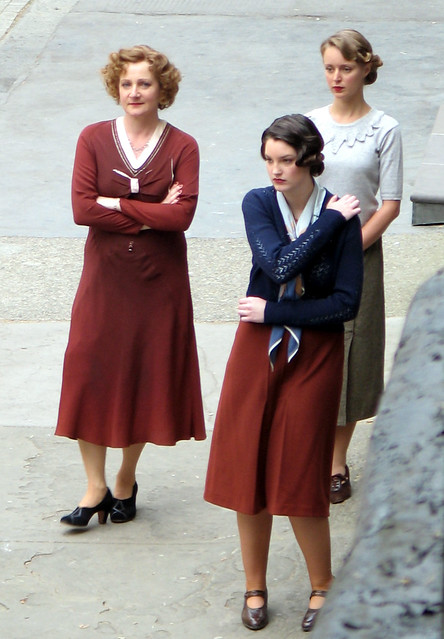
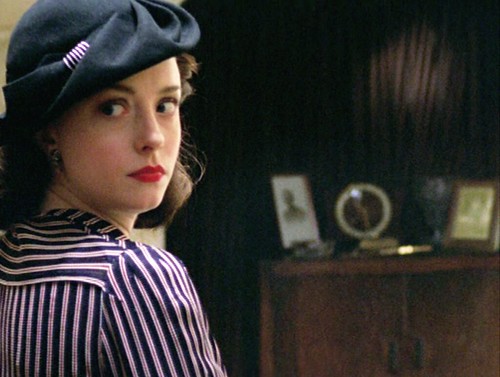
As one last shout out, I've been watching a lot of David Suchet's Poirot adaptations lately, which (in addition to being brilliant adaptations of Agatha Christie's novels and short stories) really showcase the fashion, art, and architecture of the mid 1930's.

Gorgeous.
Also gorgeous.
At the end of the 1930's, World War II broke out in Europe, which will lead us into next week's look at the 1940's. Once again, we'll see a near stand still of fashion progress (like in the Regency Era due to the Napoleonic Wars), and a return to simplicity that always comes around by necessity during wartime.

Wednesday, September 5, 2012

"Everything Today is Thoroughly Modern"- the 1920's

Though I don't consider myself anything close to an expert, I do feel like I know more about 1920's fashion than any other time in history (perhaps with the exception of the Regency Era). It's been a 20's filled year for me, and for lots of other people as well. Aside from my own work both as a costume designer and an actor on various 20's projects, The Artist, a film done in the style of silent movies, won the Academy Award for Best Picture, and this spring, the runways were filled with art deco-inspired designs.

Source
So why this fascination with the 1920's? Despite the fact that the fashion is nearly 100 years old, flapper styles still reflect change, and the fresh novelty of new freedoms. Women had the right to vote, the world was on the other end of the biggest war they had ever seen, and the modern age had begun. Cue several hundred references to Thoroughly Modern Millie.

Source
You've probably noticed that my Decade Wednesday posts up to this point have been very formulaic. Take a look at the skirts, bodice, sleeves, textiles, and hairstyles. Note the differences between day and evening wear. But now that the modern era of fashion has begun, it's harder to do that. Women began to wear more suits and separates as they entered the workplace in droves. There was more variety in fashion than ever before, ranging from feminine, lacy dresses that were reminiscent of pre-war styles to sharp edges, bold colors, and scandalously short skirts.

Perhaps the most recognizable trait of 1920's clothing is the long, loose, straight lines that came after the tight corseting women had known their whole lives.

Source
Second to that are the new, shorter skirts.

Source
Evening dresses on the whole had the same sleeveless, moderately low neckline and mid-length skirts (although some high fashion couturiers played with lengths and sleeves).

Source
A stunning early decade wedding dress.
Though the long, straight silhouette remained the same for both day and night (with a few notable fuller-skirted exceptions called robes de style, seen here), day wear had the addition of sleeves and collars, both for suits and suit-like dresses.

Source
If a dress could be said to have any waist at all, it was very low, well below the hips.

Source
This was all to enhance the new idea of womanly beauty: emulating men as much as possible. That's not to say that women suddenly took to cross dressing, but straight lines that minimized curves and short haircuts were very much in fashion. Coats did this as well as garments, effectively hiding the wearer under folds of warm, bulky cloth.

Looks comfy.


Though a boyish silhouette was popular, garments themselves were far from masculine. After a brief hiatus during the first World War, lace, floral accents, furs, bows, and feathers were back in full force. Oh, and did I mention beads? Everything a woman wore in the evening from gowns to headpieces were dripping in beads. And it was glorious.

Source
Source
Source
Source
Chiffon was a popular fabric for evening wear, and it moved beautifully with the lively new dances of the time.

Source
 By the 1920's, bobbed hair was widely accepted. Two versions of the bob existed, a very sleek, mature look, sometimes with bangs, and a curlier, more youthful style, often accomplished with a technique called a finger wave.

Source
Source
Hats were very fitted over the head and very close to the face, forming the cloche look that's iconic of the 1920's and 30's. I once read that hats were meant to be worn very low on the forehead, so that the only way a woman could see would be to tilt her head up and look down her nose.

Source
By the end of the decade, longer skirts were coming back into fashion. To ease the world back into long skirts after going short for nearly an entire decade, designers used tiers to break up the visual line and trick the eye. (Thanks, Wiki)

Source
This image foreshadows what we'll see next week; a return to feminine cuts and simpler styles. In my mind, I've always associated the 1930's with the 1920's. It will be interesting to see how much they really differ. Cheerio until then.

Friday, July 20, 2012

Book Review: Fashion Sourcebook 1920's

Source
A couple months ago, I found myself working on a costume project that required a pretty extensive knowledge of the 1920's. Being the relative costume novice that I was (and still am, to some extent), I really only had a smattering of expertise about the Regency and Victorian eras, and next to no knowledge about the 20th century. So I decided (mostly out of necessity) to become an expert on the era overnight. After exhausting every resource on the internet, I turned to books, and this gem came into my life.

Fashion Sourcebook 1920's by Charlotte Fiell and Emmanuelle Dirix is an enormous brick of gold for fashion history enthusiasts, with pages upon pages of design sketches and photographs from the era, separated into categories of Daywear, Eveningwear, Outerwear, Accessories, and much more. It gives a clear look of both high fashion and everyday clothing in the Roaring 20's that's both educational and fun. There's also an informative forward with a comprehensive look at the elements of early 20th century life that shaped the world of fashion.

Another great feature of the book that I loved was the designer's index in the back, with a short biography of each designer, and a list of where their designs appear throughout the 576 page book. My favorite designer in the book is Atelier Bachroitz, whose feminine, whimsical, but still totally modern designs stood out among the sleek, straight lines of his contemporaries.
Source
Fashion Sourcebook 1920's is a helpful and truly enjoyable resource. It was a lifesaver for my work, and an incredible addition to my ever-growing fashion history library. Find out more about the book at its website, and click here to purchase.